1937 Berlin – 2017 Berlin
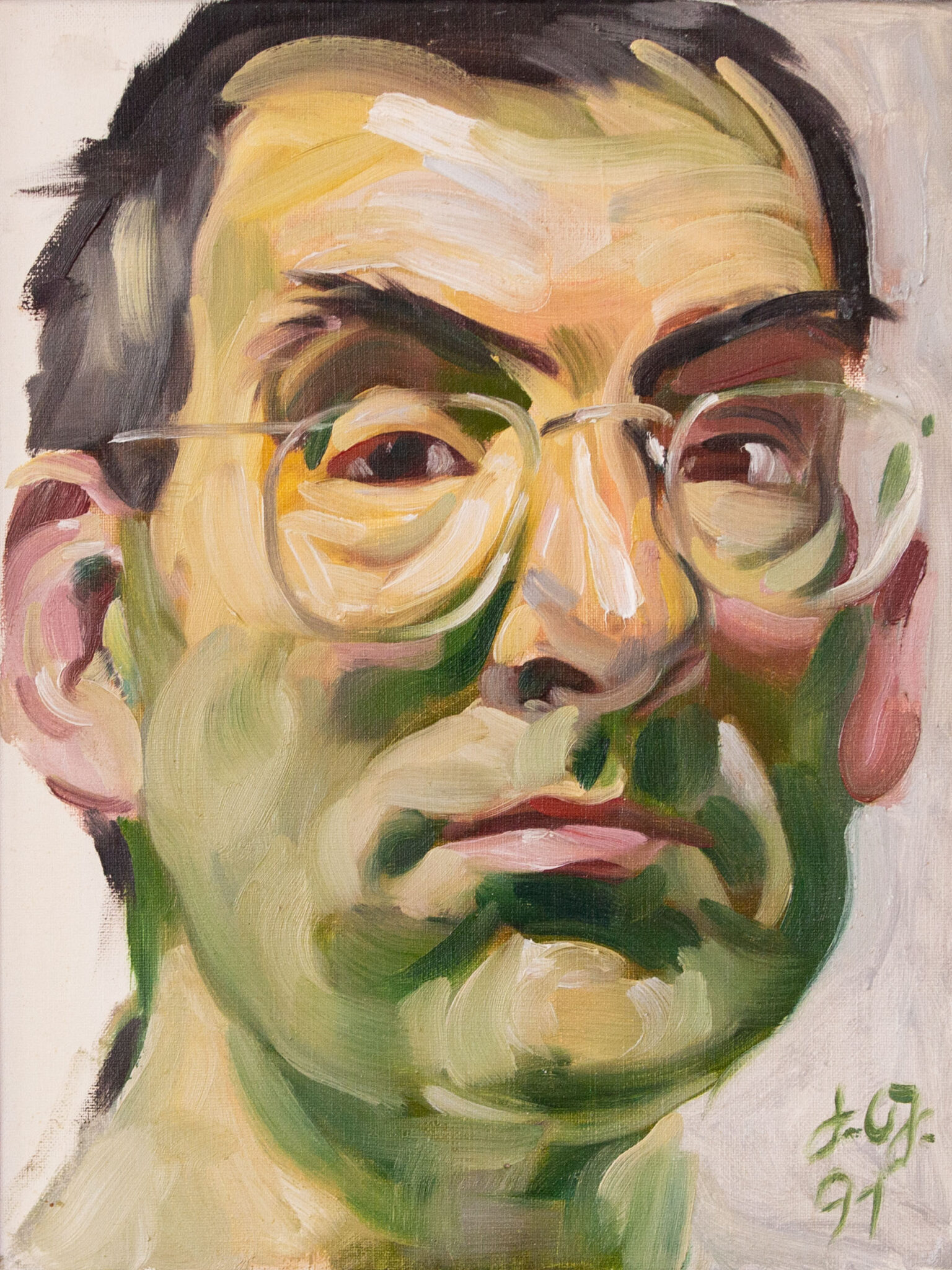
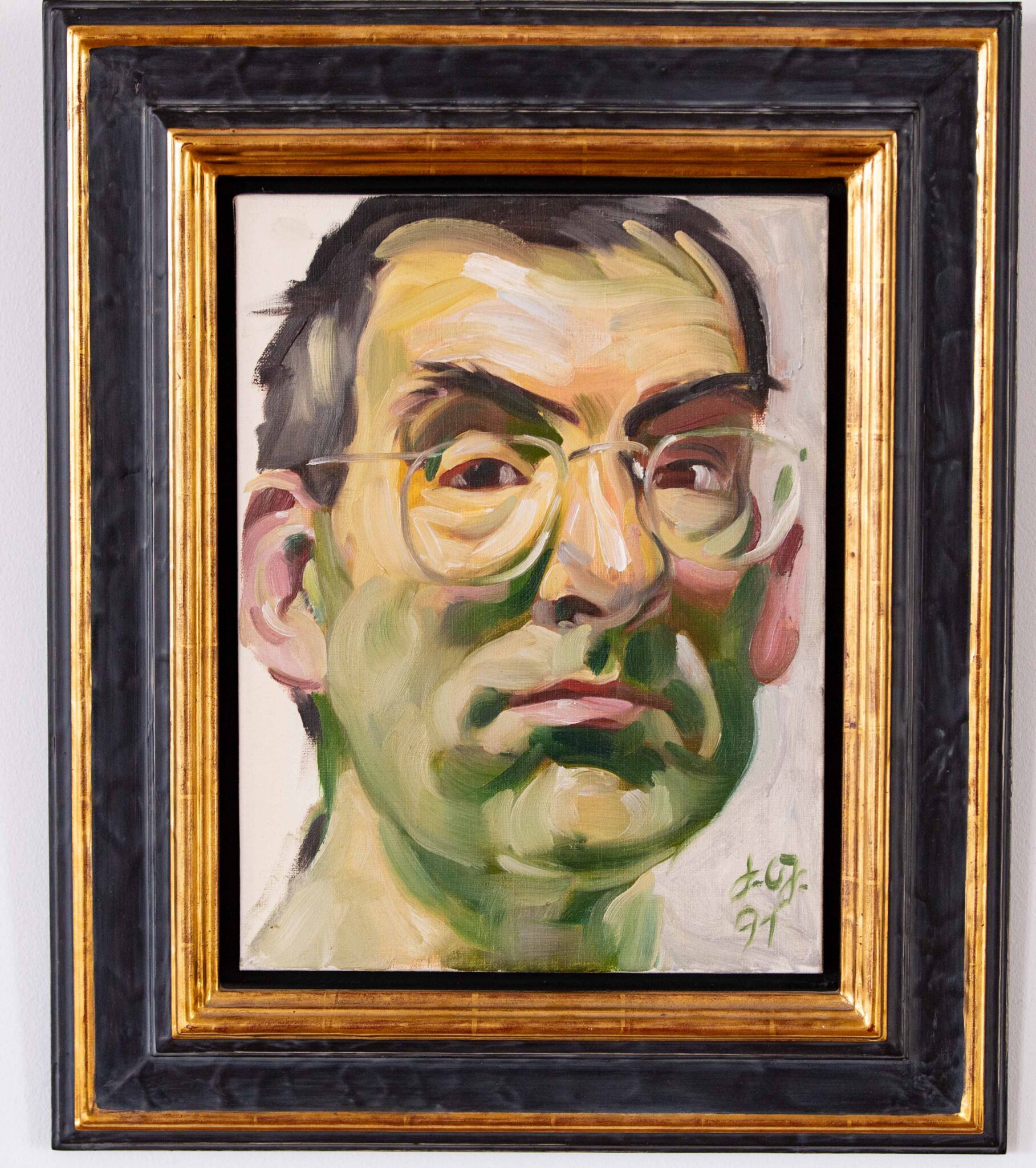
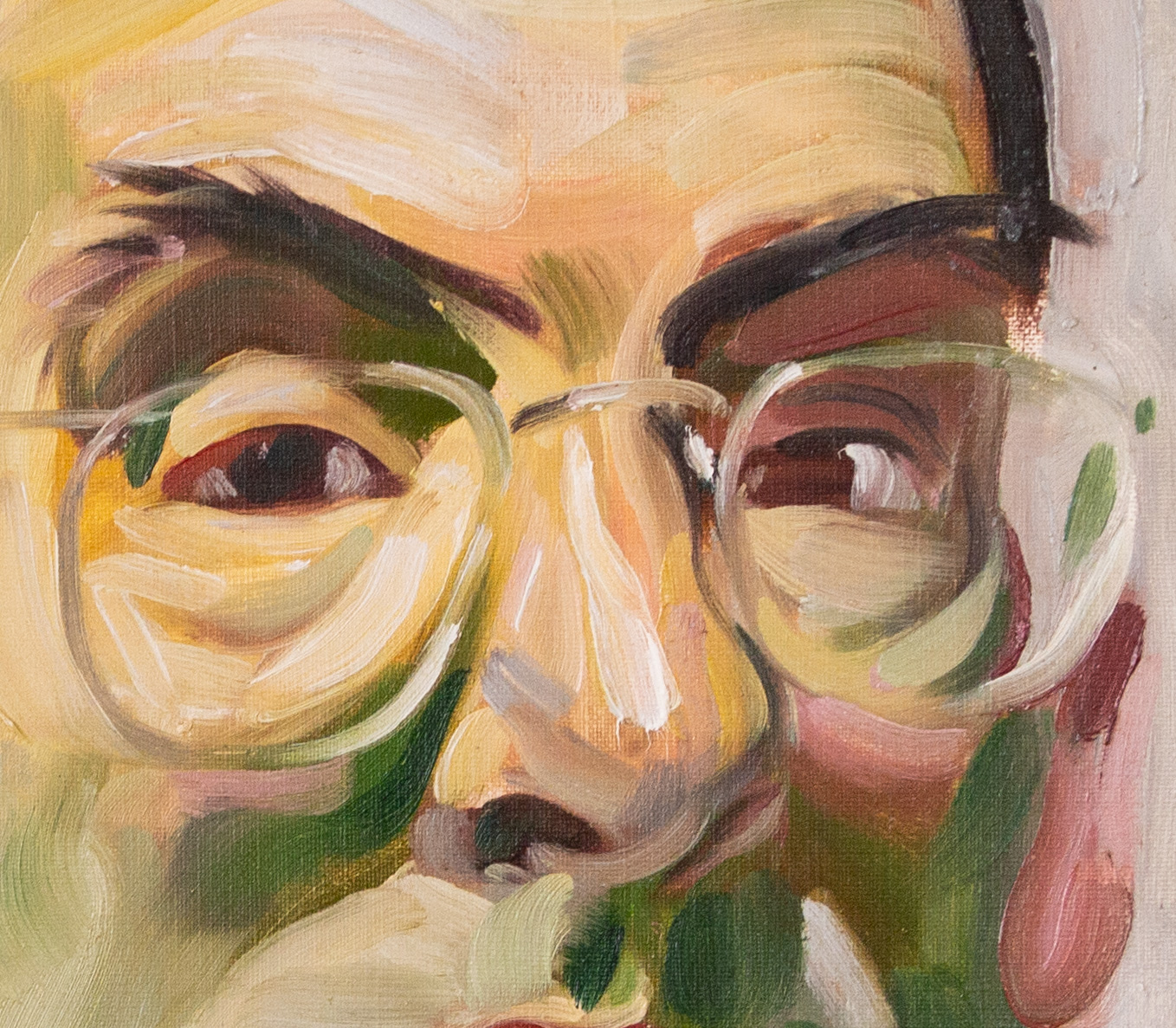
„Selbstbildnis“, 1991
40 x 30 cm
Oil on canvas
Faces, Contemporary
Galerie Paffrath
9,800 €
Johannes Grützke is one of those rare artists whose figurative painting, despite the dominance of abstract art in the 1970s, today enjoys both museum recognition and a stable market value amongst collectors. His founding of the ‘School of New Splendour’ was an art-political manifesto against the marginalisation of representational painting from the exhibition circuit. Grützke’s grotesque depictions of people, executed in the Old Masters’ tempera technique, combine theatrical staging with satirical social criticism. His monumental state commissions in the Bundestag and St Paul’s Church demonstrate how his ironic visual language was understood as a reflective engagement with democracy – a position of particular cultural-historical significance for collectors of post-war figurative painting with an interest in history. Johannes Grützke is one of the most significant figures in representational painting in post-war German art. Born in Berlin in 1937, he developed an unmistakable visual language that combines figurative realism with grotesque exaggeration and theatrical staging. Whilst large parts of the art world in the 1960s and 1970s were dominated by abstract and conceptual art, Grützke deliberately focused on the depiction of human beings – with all their contradictions, weaknesses and social entanglements. His painting is to be understood as critical observation, as a satirical commentary on the present and, at the same time, as a return to traditional painting techniques and art-historical tradition. From 1959, Grützke studied at the State Academy of Fine Arts in Berlin under Hans Orlowski and Peter Janssen. At the same time, he worked as a stagehand in the theatre, a job that sharpened his eye for scenography and dramatic visual spaces. A decisive influence came in 1962 when he took part in Oskar Kokoschka’s final summer course in Salzburg, which provided him with a model for a style of painting that could be emotional, intellectual and socially critical all at once. In 1973, Grützke founded the ‘School of New Splendour’ in Berlin together with Manfred Bluth, Matthias Koeppel and Karlheinz Ziegler. The group articulated an explicit opposition to the dominance of abstract painting and sought to bring representational painting back into the discourse as an equal, intellectually demanding position. Grützke’s depictions of people are characterised by irony, exaggeration and psychological insight. His figures resemble caricatures with exaggerated musculature and distorted facial features. The grotesque becomes a stylistic device for exposing self-deception, claims to power and social rituals. Grützke preferred to work with tempera and opaque paints, which lend his paintings a matt, two-dimensional quality. Figures appear as if arranged on a stage, frozen in symbolically charged gestures. He received several major public commissions, including the monumental frieze ‘Der Zug der Volksvertreter’ (The Procession of the People’s Representatives) in Frankfurt’s Paulskirche and a mural in the Paul-Löbe-Haus of the German Bundestag. These works in public spaces played a significant part in ensuring that his oeuvre was regarded as a culturally relevant contribution to the Federal Republic’s self-reflection. From the 1970s onwards, Grützke taught at the University of Fine Arts in Hamburg and the Academy of Fine Arts in Nuremberg. He received numerous awards, including the Villa Romana Prize and the Hannah Höch Prize in 2012. Grützke has established himself as a stable asset in the art market. His works document a distinctly German post-war perspective and are not only aesthetically appealing but also significant in terms of cultural history.
Johannes Grützke is one of the most significant figures in representational painting in post-war German art. Born in Berlin in 1937, he developed an unmistakable visual language that combines figurative realism with grotesque exaggeration and theatrical staging. Whilst large parts of the art world in the 1960s and 1970s were dominated by abstract and conceptual art, Grützke deliberately focused on the depiction of human beings – with all their contradictions, weaknesses and social entanglements. His painting is to be understood as critical observation, as a satirical commentary on the present and, at the same time, as a return to traditional painting techniques and art-historical tradition. From 1959, Grützke studied at the State Academy of Fine Arts in Berlin under Hans Orlowski and Peter Janssen. At the same time, he worked as a stagehand in the theatre, a job that sharpened his eye for scenography and dramatic visual spaces. A decisive influence came in 1962 when he took part in Oskar Kokoschka’s final summer course in Salzburg, which provided him with a model for a style of painting that could be emotional, intellectual and socially critical all at once.
In 1973, Grützke founded the ‘School of New Splendour’ in Berlin together with Manfred Bluth, Matthias Koeppel and Karlheinz Ziegler. The group articulated an explicit opposition to the dominance of abstract painting and sought to bring representational painting back into the discourse as an equal, intellectually demanding position. Grützke’s depictions of people are characterised by irony, exaggeration and psychological insight. His figures resemble caricatures with exaggerated musculature and distorted facial features. The grotesque becomes a stylistic device for exposing self-deception, claims to power and social rituals.
Grützke preferred to work with tempera and opaque paints, which lend his paintings a matt, two-dimensional quality. Figures appear as if arranged on a stage, frozen in symbolically charged gestures. He received several major public commissions, including the monumental frieze ‘Der Zug der Volksvertreter’ (The Procession of the People’s Representatives) in Frankfurt’s Paulskirche and a mural in the Paul-Löbe-Haus of the German Bundestag. These works in public spaces played a significant part in ensuring that his oeuvre was regarded as a culturally relevant contribution to the Federal Republic’s self-reflection. From the 1970s onwards, Grützke taught at the University of Fine Arts in Hamburg and the Academy of Fine Arts in Nuremberg. He received numerous awards, including the Villa Romana Prize and the Hannah Höch Prize in 2012. Grützke has established himself as a stable asset in the art market. His works document a distinctly German post-war perspective and are not only aesthetically appealing but also significant in terms of cultural history.