
1863 Tettenweis – 1928 Munich
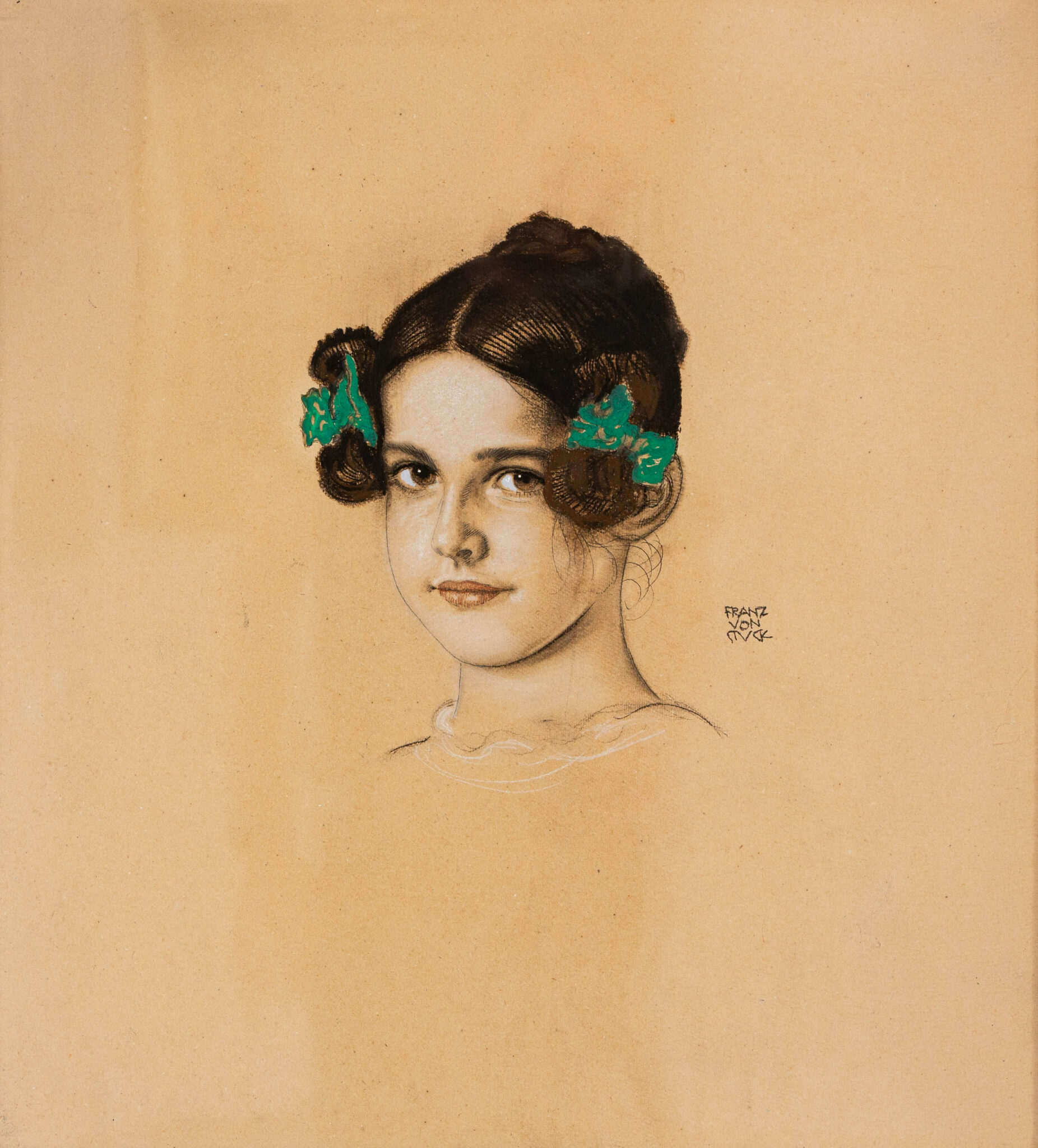
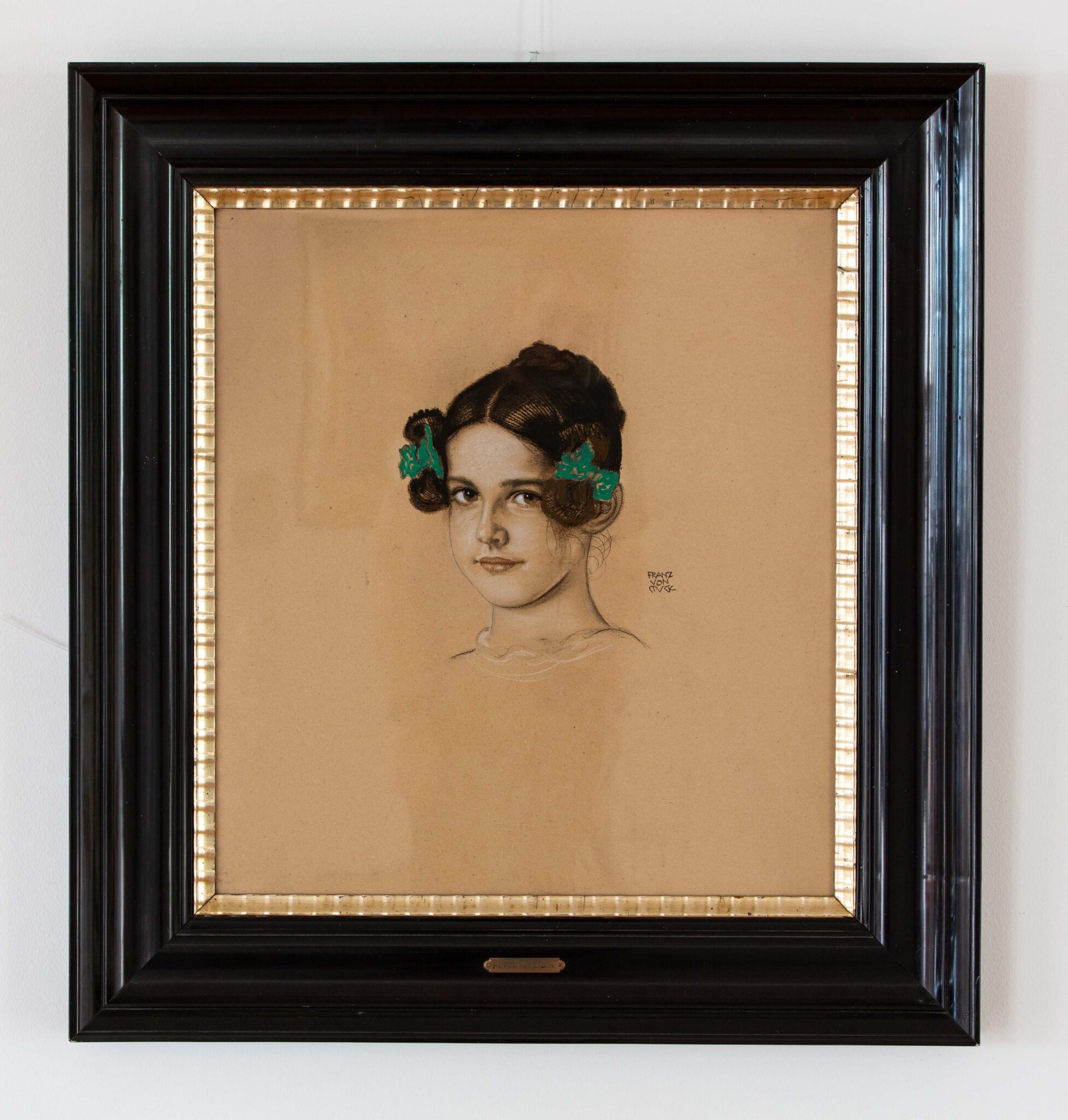
“Portrait of his daughter Mary”
54,5 x 49,5 cm
Charcoal, chalk, opaque paint on cardboard
Faces, Fine Art
Galerie Paffrath
19,800 €
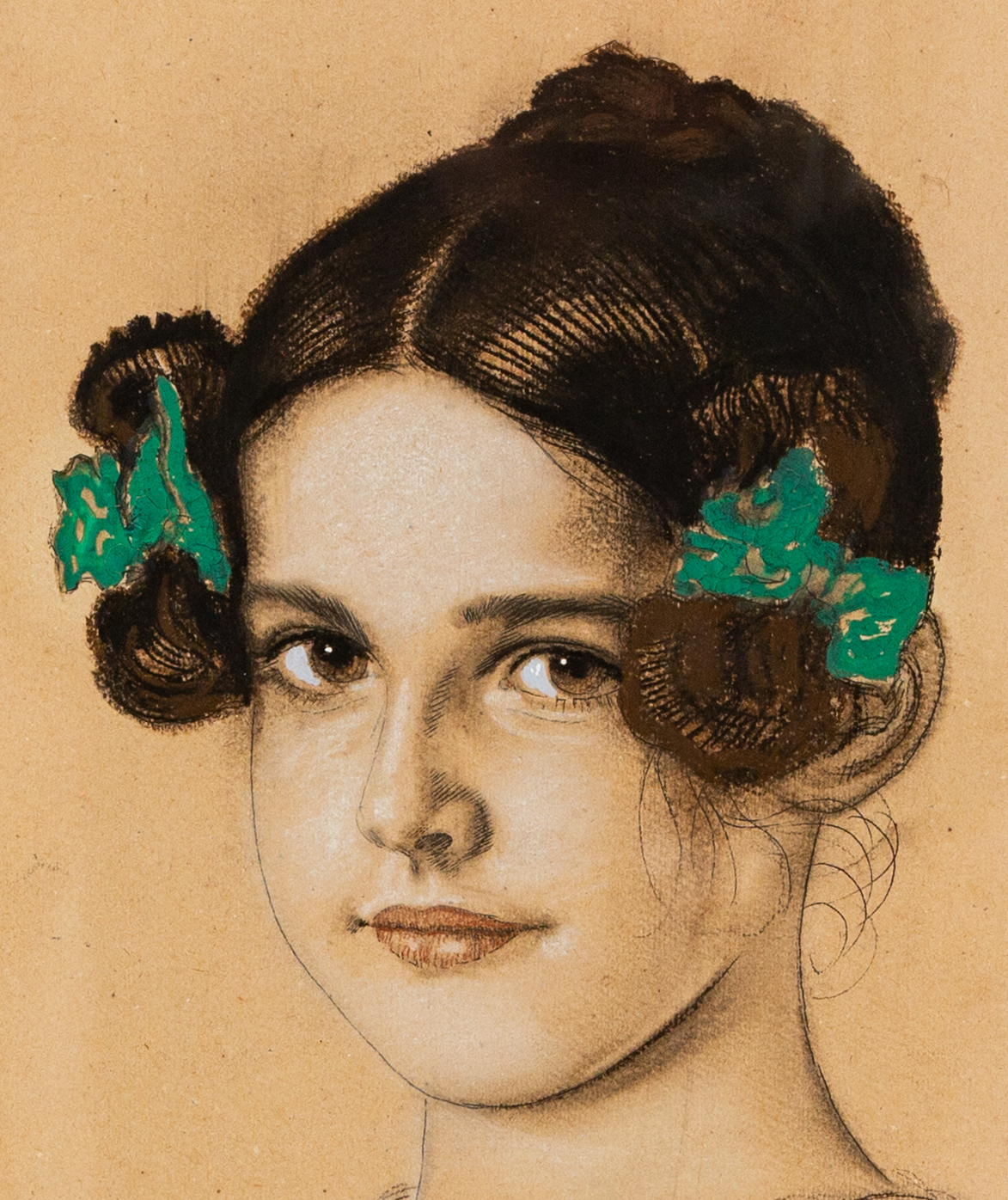
The portraits of his family, particularly those of his wife Mary Lindpaintner and his only biological daughter Maria Franziska, known as Mary, play a special role in Franz von Stuck’s body of work. These portraits run like a leitmotif through his work from 1905 to around 1920 and mark an area where public representation and private intimacy overlap. His daughter Mary was repeatedly depicted in various roles and costumes – as a little queen, as a bullfighter, as a Greek woman – suggesting a playful, theatrical staging. A particularly well-known example is the ‘Portrait of his daughter Mary with green bows’, painted between 1910 and 1913. This portrait depicts a young woman with dark brown hair pinned up in side curls, adorned with bright green bows. The technique is delicate, often executed on warm-toned paper, in oil on canvas or as a drawing. The green bows are a recurring iconographic motif that emphasises the youthfulness and elegance of the subject. Such portraits bear a striking resemblance to Lenbach’s representative portraits, but differ in their more intimate, less pompous visual language. From an art-historical perspective, these portraits of Mary are significant because they document how Stuck combined his mythological and allegorical repertoire with real people. His daughter is not depicted as an anonymous muse, but as an individual with recognisable features and personality. At the same time, the depiction remains stylised, reflecting the influence of Art Nouveau. The serial nature of the works – there are several versions of the Mary portrait featuring green bows – suggests that Stuck also conceived these portraits for the art market. They circulated amongst collectors and are now found in various collections and on the international art market. The father-daughter relationship, as depicted in these works, is characterised by affection and aesthetic stylisation. Mary Stuck not only served as a model but was also actively involved in her father’s artistic practice. This dual role – as a real person and as an aesthetic object – raises questions of identity, representation and familial power structures, which are increasingly being discussed in art-historical research.